Case study · 8 min read
How smaller companies win with AI: lessons from Arabyati's award-winning EdTech platform
Smaller companies don't need bigger budgets to compete with AI. They need focus. Here is how Arabyati used AI to improve its product and its operations, and what other growing companies can take from it.
On this page
Large companies have more data, more engineers and bigger budgets. Smaller companies have something else: they can decide in one meeting and change their product in weeks, not quarters. Used with focus, AI turns that speed into a real competitive advantage.
Arabyati, a platform that teaches Arabic to non-native speakers, shows what that looks like in practice. In August 2026 Arabyati won the EdTech category at Inc. Arabia's Best in Business Awards in Riyadh. Perceptful has been Arabyati's technology partner since 2023. This article explains how we approached AI together and what other growing companies can take from it.
The advantage smaller companies already have
Most conversations about AI assume the winners will be the companies with the most resources. In practice, the companies that get value from AI first are the ones that can decide quickly, ship quickly and learn quickly. That describes most growing companies better than most enterprises.
What smaller companies usually lack is not ambition but a clear starting point. With a small team, every experiment competes with the day job, so scattered pilots rarely survive. The answer is to choose a direction first and let it decide which AI work gets done.
1. Pick a direction before picking tools
Many companies start with AI by adding a chatbot to their website or trying a few tools. That rarely changes their position in the market.
With Arabyati we started from one question: where can AI make the core product better for learners, and where can it remove the work that slows the team down? The answer gave us two tracks, and every AI initiative had to serve one of them, with a clear owner and a measurable outcome.
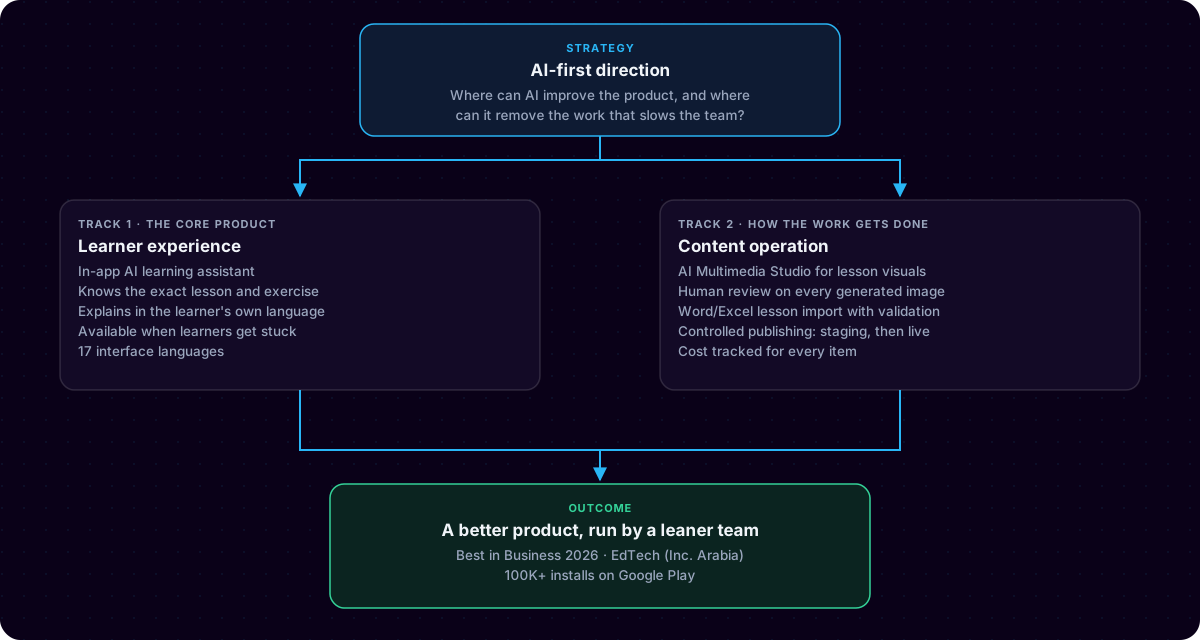
Swipe to see the full diagram →
2. Put AI inside the core product
The most visible change was an AI learning assistant inside the app. It doesn't give generic answers. It knows the exact lesson or exercise the learner is working on and explains it in the learner's own language. The app's interface is available in 17 languages, so a learner from Jakarta and a learner from Istanbul both get help they can follow.
Why this matters competitively:
- It helps at the moment a learner gets stuck. That's the moment language learners most often give up.
- It scales support across languages without a matching increase in teaching staff.
- It's hard to copy. The value comes from connecting the model to Arabyati's own structured curriculum, not from the model alone.
Your advantage isn't access to AI. Everyone has that. It's your content, your data and your understanding of your customers, connected to AI in a way a generic tool can't match.
3. Use AI to change how the work gets done
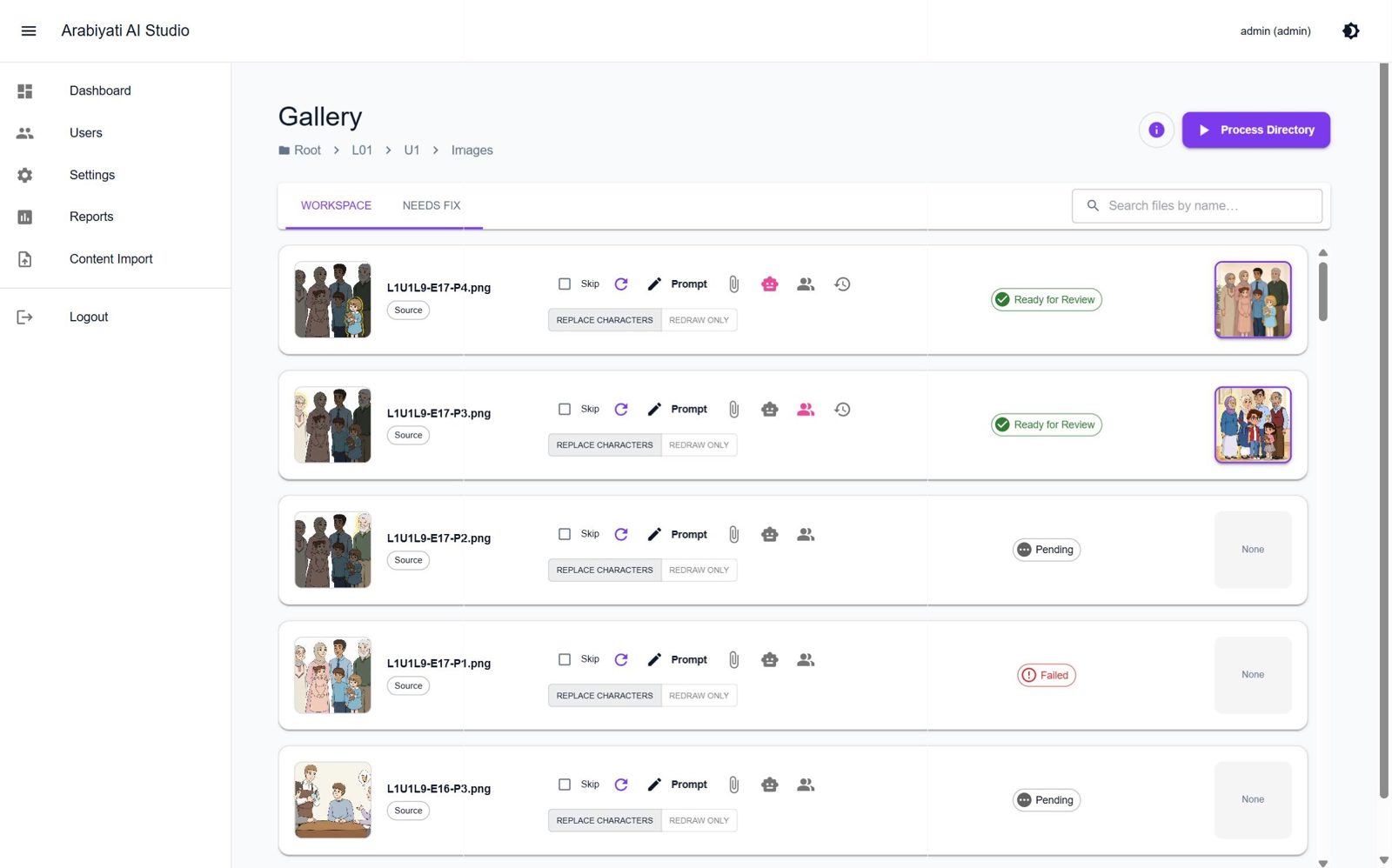
For an EdTech company, most of the time and money goes into content: lessons, exercises, audio and images. That's where we built the second track, the Arabiyati AI Multimedia Studio, an internal platform with separate roles for administrators, supervisors, editors and reviewers.
AI-generated visuals, with people in control
Editors refresh lesson illustrations with AI, starting from the existing source images. They can give a full prompt, replace the characters or simply redraw the scene. A reviewer then approves each image or rejects it with written feedback, which goes back to the editor. Nothing reaches learners without a human decision.
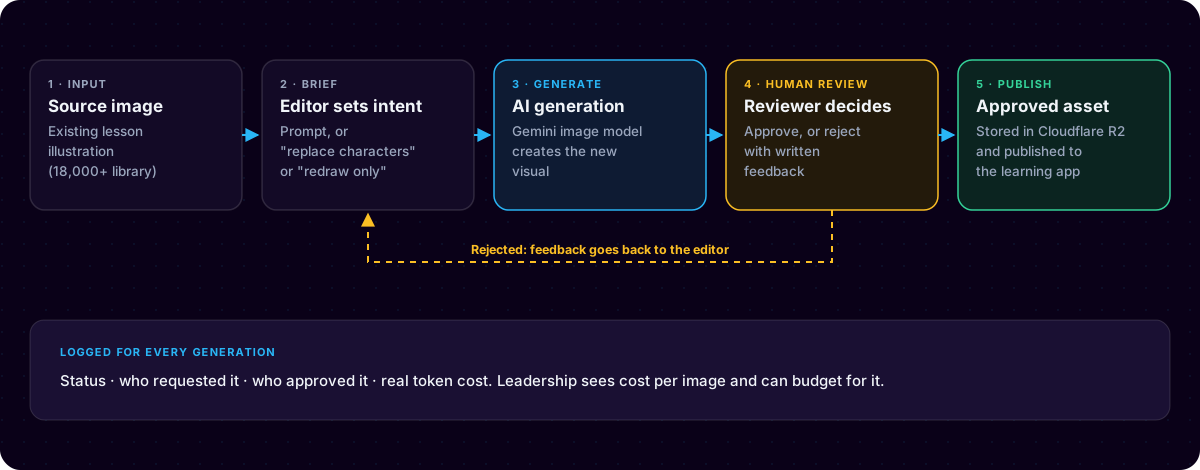
Swipe to see the full diagram →
Structured lesson import
Curriculum teams write in Word and Excel, and they should keep doing so. The Studio reads lessons and exercises from those files and checks them automatically, for example flagging an exercise that has no correct answer. Supervisors fix the flagged items and then publish in a controlled step, first to staging and then live on the learning platform.
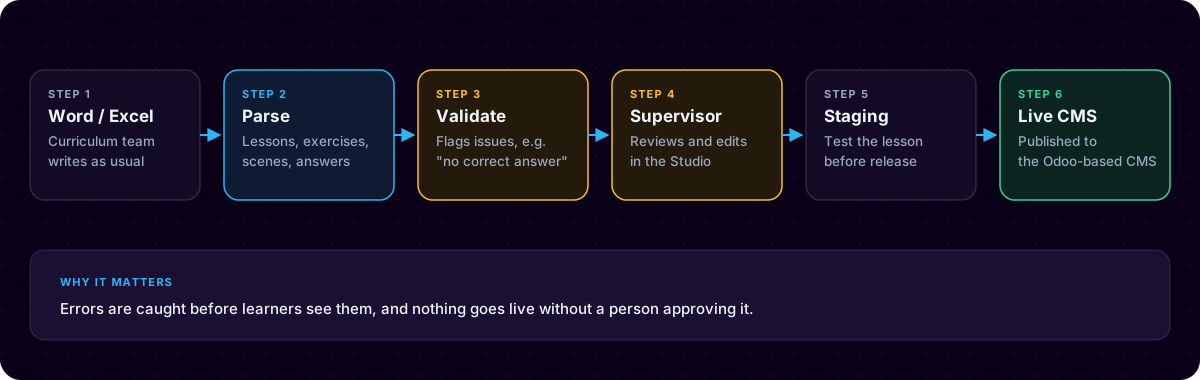
Swipe to see the full diagram →
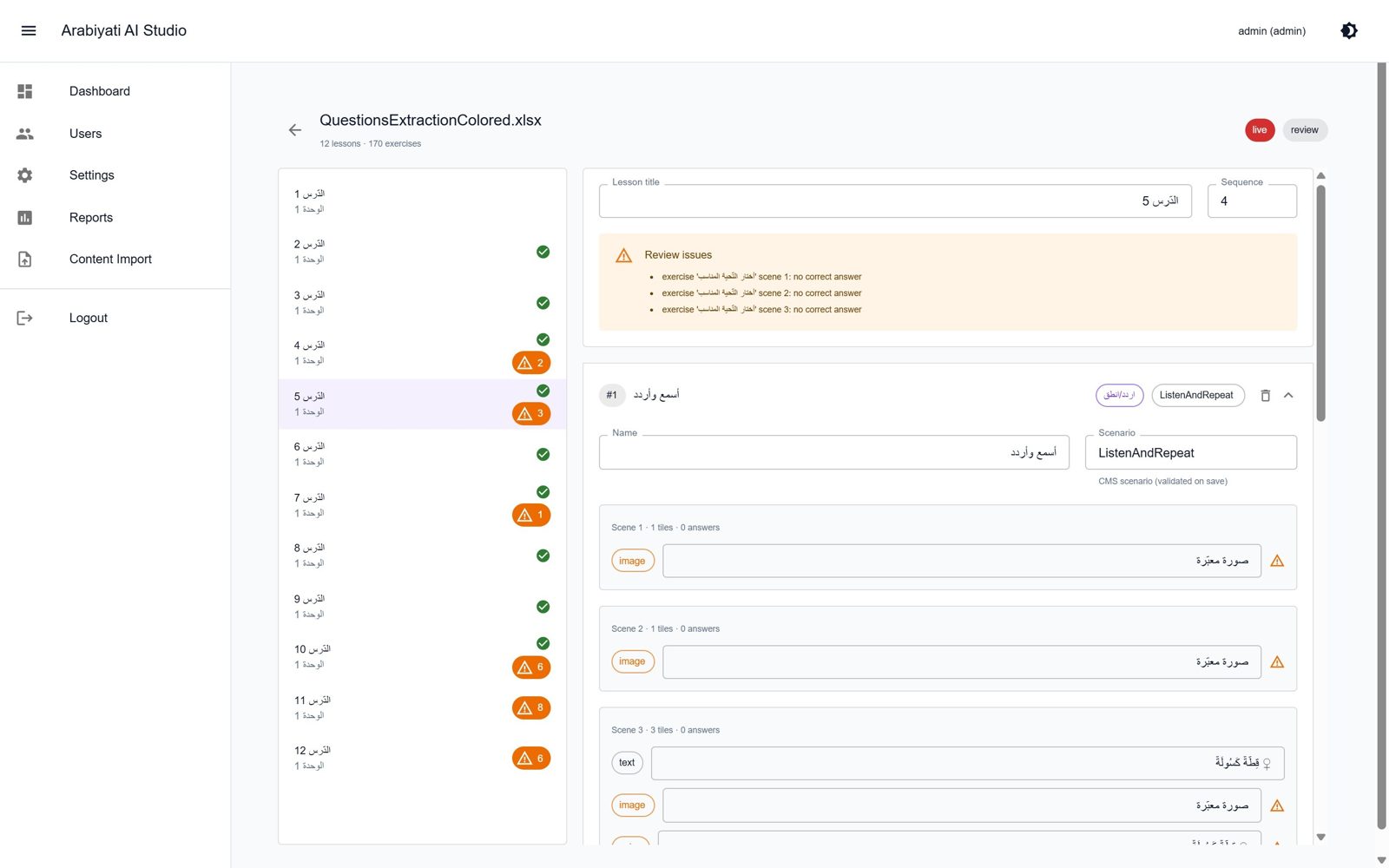
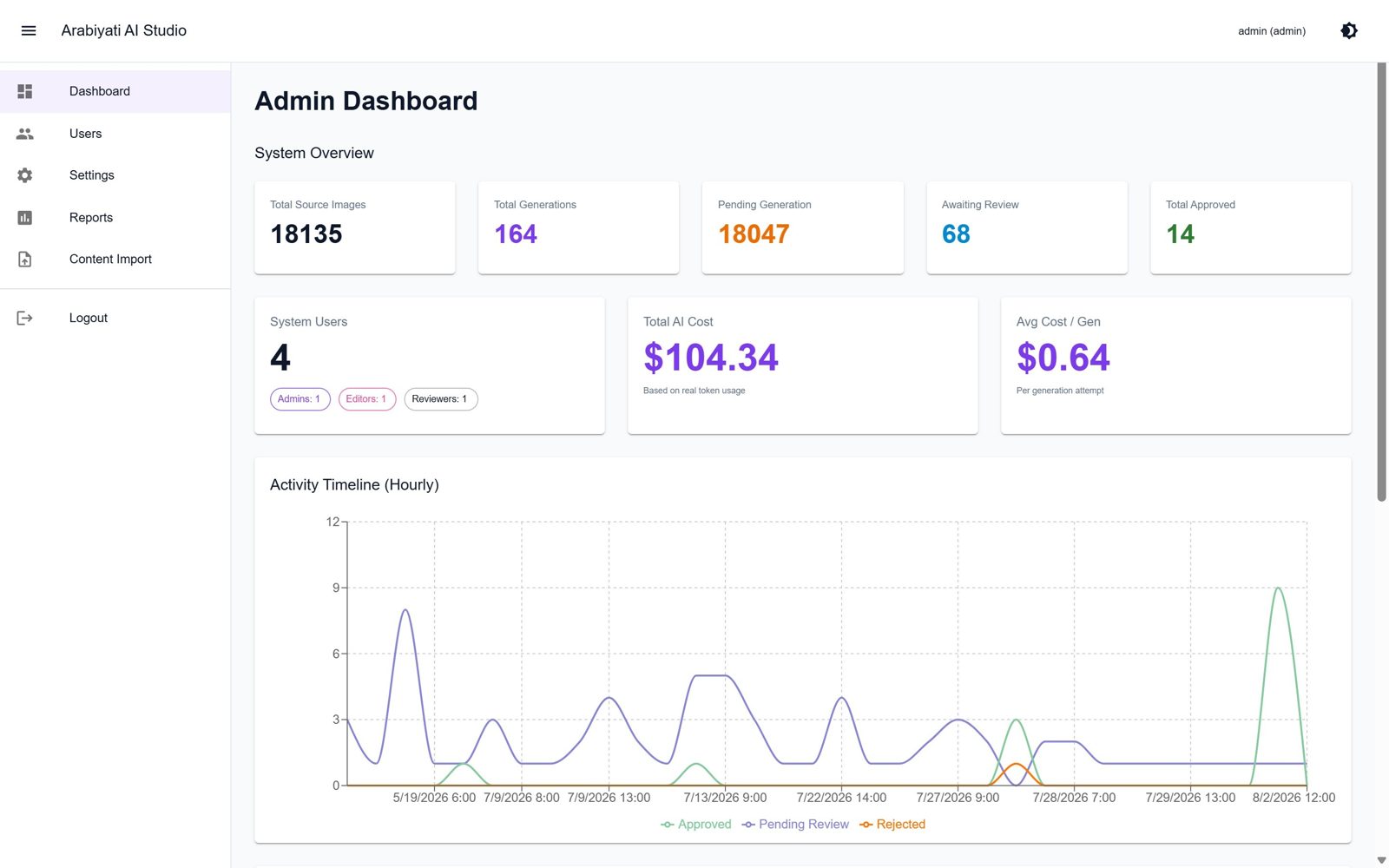
Cost visible from day one
Every generation is logged with its status, who requested it, who approved it and its actual token cost. Leadership can see what AI costs per image and plan for it, instead of discovering it on the monthly invoice.
4. Put guardrails in from day one
In a product people learn from, trust matters more than speed. These were the guardrails that let a small team use AI with confidence:
| Guardrail | What it prevents |
|---|---|
| A person approves every AI-generated image | Off-brand, inaccurate or culturally inappropriate visuals reaching learners |
| Automatic validation on imported lessons | Broken exercises, missing answers and formatting errors going live |
| Cost logged per item | AI spending that nobody can explain or forecast |
| Staging before production | Untested changes reaching every learner at once |
| Clear roles for editors, reviewers and supervisors | Unclear ownership of what gets published |
These practices follow what leading AI teams recommend: keep a human in the loop where the output matters, measure quality and cost, and release in stages.
5. Treat technology as part of the business
Our work with Arabyati goes beyond building software. As a long-term partner we help with product and feature planning, support marketing, and manage the outsourced teams and IT resources behind the platform. That lets the founding team focus on learners, content and growth, while technology decisions follow the same strategy.
The result
Arabyati now has an AI-first learning product, an AI-assisted content operation and a platform with more than 100,000 installs on Google Play. In August 2026 the team's work was recognized with Best in Business 2026 in EdTech.
The award belongs to Arabyati's team. We're proud to have been their technology partner along the way.
A playbook for smaller companies
- Choose two or three AI priorities. Tie each one to your core product or your biggest operating cost, and give it an owner.
- Build on what only you have. Your content, your data and your customer knowledge are what make AI hard to copy.
- Keep people in control of anything customers see, and make that step fast.
- Measure cost and quality from the start, per item, not per month.
- Work with a partner who stays after launch. AI products improve through iteration, not a single delivery.
AI-first Arabic learning across six proficiency levels and 17 interface languages.
Read case study →Frequently asked questions
Does a small company need its own AI model?
Rarely. Most of the value comes from connecting existing models to your own content, data and workflows, with the right checks around them. Training a model from scratch is usually the last option, not the first.
How do you keep AI-generated content accurate?
Put a person in the loop wherever the output reaches customers, validate structured content automatically before publishing, and release in stages. In Arabyati's case, every generated image is reviewed and every imported lesson is validated before it goes live.
Where should a small company start with AI?
Start with one workflow that is repetitive, costly and measurable, and test it on real data. Our two-week [AI Sprint](/blog/why-ai-pilots-stall) is designed for exactly that.
Keep reading
Why AI pilots stall, and how a 2-week sprint gets them moving
Most AI pilots don't fail on the model. They stall on scope, data and the missing definition of 'good'. Here is a practical way to get from demo to decision in two weeks.
September 28, 2026
Turning anonymous employee feedback into decisions with an LLM
People finally speak up, and leadership gets hundreds of comments nobody has time to read. Here is how we turned anonymous feedback into themes and actions with an LLM, and why the rewards engine next to it uses rules instead.
September 28, 2026